How Tattoo Size Determines Pain Differently for Male and Female Bodies
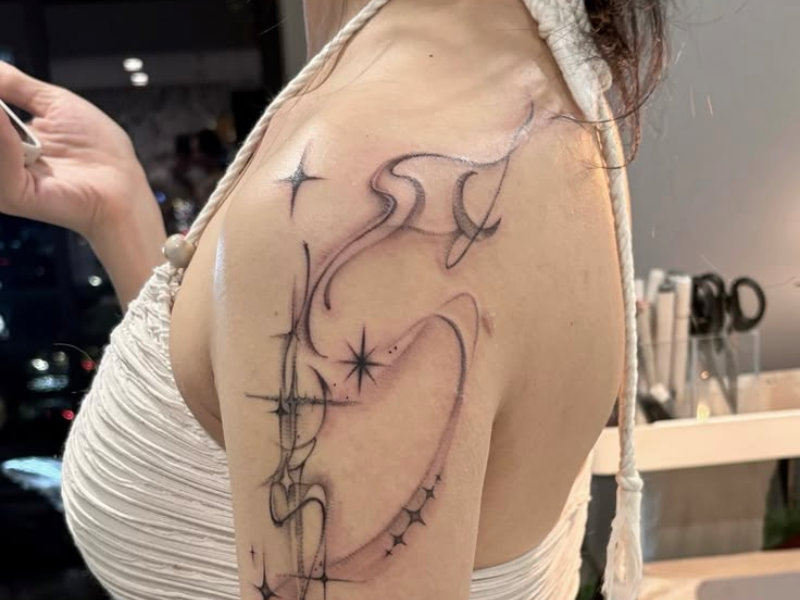
Most people think about tattoo pain in terms of placement. The ribs hurt more than the outer arm. The spine is more intense than the shoulder. That framing is accurate, but it leaves out a variable that shapes the experience just as much: size. A 2-inch piece on the inner wrist and a 6-inch piece on the inner wrist are not the same experience, even though the placement is identical. The size changes everything from session length to skin trauma to how the body manages the cumulative stress of a long sitting.
What's less commonly discussed is how size-related pain plays out differently across male and female bodies, not because of pain tolerance as a personality trait, but because of measurable anatomical differences that affect how tattoo work interacts with the body.
Why size affects pain in ways placement alone does not
Pain during a tattoo session comes from two sources operating at different timescales.
The first is the immediate nerve response to the needle. Tattoo needles penetrate the skin at roughly 50 to 3,000 punctures per minute depending on the machine and technique. Each puncture activates pain receptors in the dermis. For a small piece completed in 20 to 30 minutes, that nerve response stays relatively acute and manageable for most people. The body has not yet shifted into a sustained stress response.
The second source is cumulative. Sessions longer than 60 to 90 minutes introduce a different pain dynamic. Adrenaline production rises and then begins to drop as the session extends. The body's natural analgesic response, which makes the first portion of most tattoo sessions more tolerable than expected, weakens. Skin that has been worked for an extended period becomes increasingly sensitive to each additional pass. What felt like moderate discomfort at the 30-minute mark can feel significantly more intense at the 2-hour mark on the same surface.
Larger tattoos require longer sessions. That relationship between size and session length is what makes size a pain variable in its own right, independent of placement.
How male and female anatomy shapes the pain experience
Anatomical differences between male and female bodies create measurable differences in how tattoo pain registers across placements and sizes.
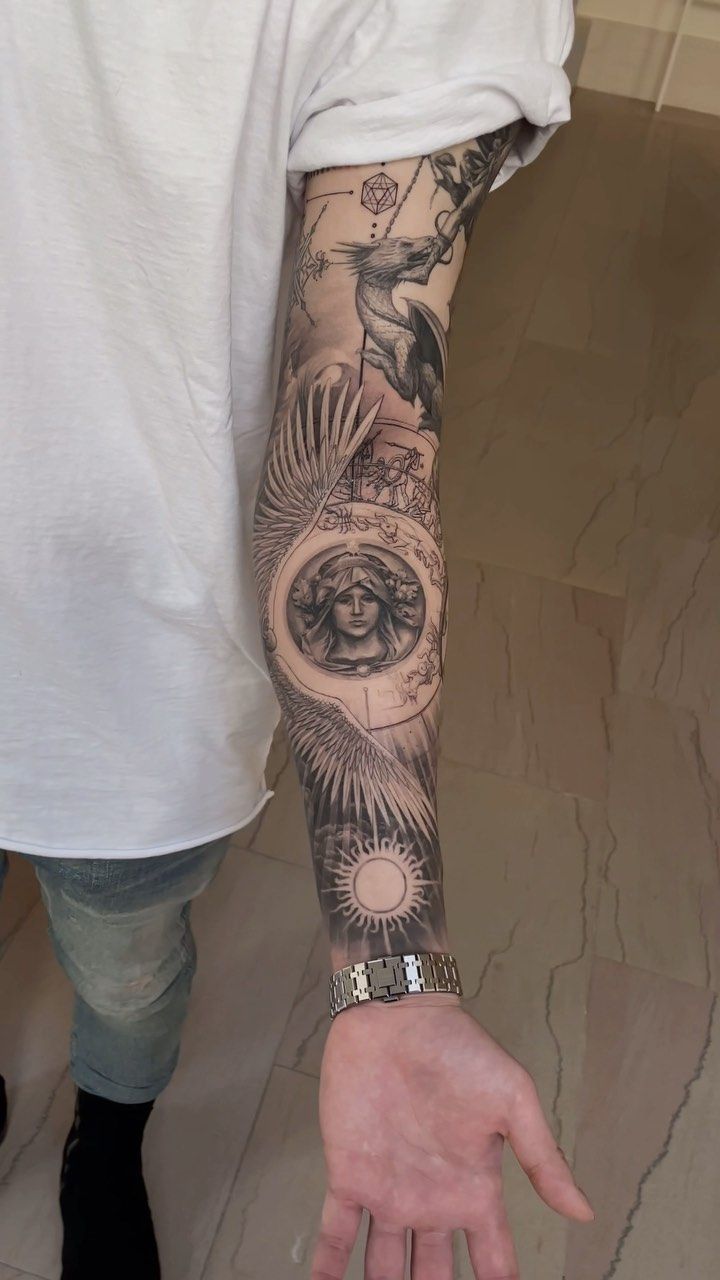
Skin thickness varies. Male skin is, on average, 25% thicker than female skin due to higher androgen levels that promote collagen density. Thicker skin means the needle has more tissue to pass through before reaching the nerve-dense lower dermis. On areas like the outer forearm or upper arm, this difference translates to a noticeably different experience for the same design at the same size.
Subcutaneous fat distribution differs significantly. Female bodies typically carry more subcutaneous fat across areas like the thighs, hips, and lower abdomen, which provides a layer of cushioning between the needle and underlying bone or nerve clusters. On these placements, a larger tattoo on a female client may produce less bone-proximity pain than the same piece on a male client with less fat tissue in the same area.
The reverse is also true. Male bodies tend to carry less subcutaneous fat on areas like the chest, ribs, and shin. A large chest piece on a male client covers more bone-proximate territory than the same sized piece on a female client with greater chest tissue depth.
Nerve density patterns also vary. Research on sex differences in pain perception consistently shows that female subjects report higher sensitivity to pain stimuli across most body regions. This doesn't mean female clients have lower pain tolerance as a behavioral trait. It means the biological signal itself is often stronger, which makes managing session length and size decisions more consequential for female clients, particularly on already-sensitive placements.
For a visual breakdown of how these differences map across the body, a tattoo pain chart male vs female shows the intensity differences by zone across both body types.
How size interacts with specific placements differently by body type
The relationship between size and pain isn't uniform across the body. Each placement has its own anatomy, and the size decision lands differently depending on where the work is going.
Ribs and side torso. For male clients, the ribs offer relatively little subcutaneous fat cushioning, meaning even a medium-size piece in this zone produces significant bone proximity sensation throughout the session. Larger pieces extending down the ribcage involve extended time over consistently sensitive territory. For female clients, the sensation is different but not necessarily lighter. The ribcage area on female clients tends to involve more skin movement during breathing, which means the needle is working on a surface that isn't fully static. Larger pieces in this zone require the artist to work around the breathing rhythm, which extends session time.
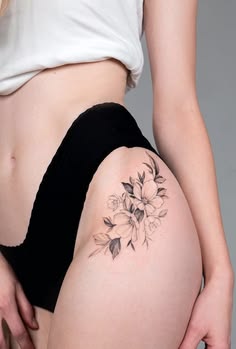
Thighs and hips. For female clients, the thigh is one of the most manageable placements for larger work. Greater subcutaneous fat depth reduces bone proximity pain significantly. A large thigh piece on a female client is frequently described as one of the more tolerable sessions even at 3 to 4 hours. For male clients, the outer thigh offers reasonable padding but the inner thigh, with its higher nerve density and less consistent fat distribution, becomes increasingly difficult to manage as size and session length increase.
Chest. A large chest piece on a male client covers the pec, sternum approaches, and potentially the collarbone, each with different pain profiles. The outer pec is manageable. The sternum and collarbone areas are not. As the piece grows in size, it inevitably incorporates more of the difficult zones. For female clients, large chest pieces are less commonly the starting point, but sternum work in particular has become increasingly popular. The sternum on a female client sits directly over bone with minimal tissue depth, making session management, specifically keeping the piece to a size that the artist can complete in under 2 hours, an important factor in the overall experience.
Upper arm and shoulder. This is the placement where the size and pain relationship is most forgiving across both body types. The outer upper arm has reasonable muscle and fat padding on most clients regardless of body composition. For male clients with developed shoulder and arm muscle mass, larger pieces in this zone are significantly more tolerable than the same size piece on the ribcage. For female clients, the same logic applies, though proportional sizing matters more given narrower average limb circumference.
Choosing the right size to manage pain by placement
The size of tattoo is not just an aesthetic decision. On sensitive placements, it's a pain management decision.
The general principle is this: the more sensitive the placement, the more important it is to keep the first session under 90 minutes of actual tattooing time. An experienced artist can estimate session length from design complexity and size before you sit down. That estimate should be part of the consultation conversation, not an afterthought.
For high-sensitivity placements such as the ribs, spine, inner arm, and sternum, keeping the initial piece to a size that fits within a single comfortable session is advisable regardless of body type. Splitting a large design across two sessions with healing time between them produces a better experience and often better results than pushing through a 4-hour sitting on a difficult zone.
For lower-sensitivity placements such as the outer upper arm, outer thigh, and shoulder, larger pieces in a single session are more viable. Body type affects this calculation, but both male and female clients generally tolerate extended sessions on these placements better than on bone-proximate zones.
The practical takeaway is to work backwards from your pain tolerance and availability, not just from the design. Decide how long a session you can manage comfortably, discuss that with your artist, and let the size follow from that constraint rather than forcing a size that the session length can't support.
What to carry into the consultation
Size, pain, and anatomy are interconnected variables that most clients don't have a clear framework for before they sit down with an artist.
Going into a consultation with a sense of your own body type, the placement you're considering, and a realistic session length you can manage puts you in a much better position to get the size right. A good artist will factor all of this in. The ones worth working with will tell you if the size you're asking for exceeds what the placement and session length can realistically support, and offer a path that gets you the result you want without making the experience harder than it needs to be.